Silt sock vs silt fence on Pennsylvania slopes
Both products hold back dirt. The difference shows up on steep ground, in wet weather and when the inspector arrives.
October 14, 2026 · 3 min read
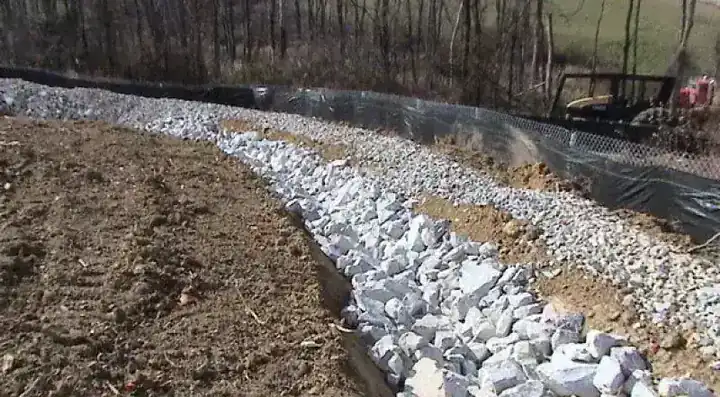
Sooner or later every disturbed site in Southwestern Pennsylvania has to answer the same question: where does the dirt go when it rains? Stripped ground sheds sediment fast, and that sediment ends up in ditches, streams and the neighbor's yard. Silt fence and silt sock are the two perimeter tools most people think of first. They are not interchangeable, and picking the wrong one on a slope is an expensive mistake.
How silt fence works
A silt fence is a length of fabric stretched between posts, with the bottom edge trenched into the ground. It slows runoff and lets sediment settle out on the uphill side. When it is installed well, it works. When it is not, it fails in familiar ways: the fabric gets undercut because the trench was shallow, it sags between posts under the weight of trapped sediment, or it tears when equipment brushes it.
Silt fence also needs to be trenched, which means digging along the line you are trying to protect. On rocky ground or where roots are thick, that trench is hard to get right.
How silt sock works
A silt sock is a mesh tube filled with filter material and laid on the surface of the ground. Water moves through it while sediment is captured and held. Because it sits on the ground instead of being trenched in, it conforms to uneven terrain, and it can go onto frozen ground, rock or pavement edges where a fence is a struggle. It does not need posts, and it does not sag the way fabric does.
Silt sock is not a magic product. It still has to be placed correctly, staked or anchored as needed, and checked after storms. A sock buried in sediment is a sock that is done working and needs attention. SCI is a certified Filtrexx installer of the silt sock sediment containment system, so the system goes in the way the manufacturer intends.
Choosing between them on a slope
No rule fits every site, but a few general guidelines hold up in the field.
- Short, gentle slopes and clean soil: a well-trenched silt fence can do the job.
- Uneven, rocky or frozen ground where trenching is hard: silt sock is usually easier to place properly.
- Long slopes: neither one works alone. Break the run up with additional lines across the slope, and manage the water that is concentrating.
- Areas near a stream or wetland: expect closer attention from reviewers, so ask what they want to see.
On steep slopes, perimeter control is only half the plan. The other half is keeping the soil in place to begin with. That is what seeding, mulching and matting are for.
Seeding, mulching and matting
Seeding puts roots in the ground. Roots are the long-term erosion control. But seed needs time to germinate, and until it does the soil is exposed, so mulch goes over the seed to hold moisture and cushion raindrops. On slopes where mulch would wash or blow away, erosion control matting is staked down on top to keep everything in place while the grass establishes.
Timing counts. Seed that goes down late in the season may not take before winter, and a bare slope in freeze and thaw loses a lot of soil. Plan the stabilization while you are planning the earthwork, not after the last truck leaves. SCI does erosion control with seeding, mulching and matting, along with sediment control measures such as silt sock that capture and secure sediment.
The usual mistakes on slopes
Most sediment problems come from the same short list. Controls go in after the ground is already stripped. A single line is asked to handle water from a huge slope. The sock or fence is never inspected after a storm. Or a ditch carries concentrated water straight past the controls. None of those are product problems. They are planning problems, which is why the best time to talk about erosion control is before the clearing starts.
Permit requirements for erosion and sediment control depend on the size and type of your project, and they are set by agencies, not contractors. Check with your county conservation district early so the plan on paper matches the plan in the field.
Talk to a certified installer
If you have a site that needs sediment control, or a slope that needs to be stabilized, the Erosion and Sedimentation Control page on this site covers what Shallenberger Construction, Inc does. Call (724) 628-8408 and we will talk through your ground, your slope and your schedule. We have been working out of Connellsville since 1971.
Shallenberger Construction, Inc, (724) 628-8408
Call (724) 628-8408More articles
What happens to the coal under your development site
Old waste piles, settled ground and surprise seams are common in Southwestern Pennsylvania, and how the coal gets processed decides what the property owner is paid.
Building a well site pad: clearing, grading and access roads
A pad is only as good as the dirt work under it. Here is the order the work runs in and where projects tend to go wrong.