What happens to the coal under your development site
Old waste piles, settled ground and surprise seams are common in Southwestern Pennsylvania, and how the coal gets processed decides what the property owner is paid.
October 14, 2026 · 4 min read
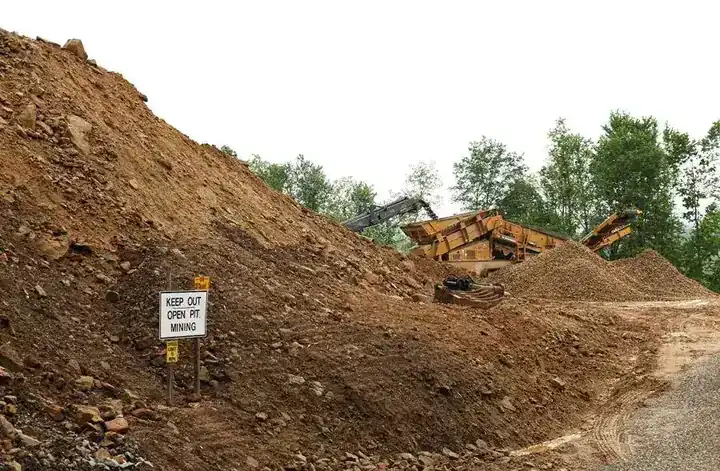
If you own ground in Fayette County, there is a fair chance coal is part of its story. The region has a long mining history, and that history shows up in the dirt: old waste piles, low spots where a mine below let the surface settle, and seams that nobody planned for until an excavator bucket found one. Developers hit it. Gas operators hit it. Landowners usually learn about it the first time somebody walks the parcel with a survey crew.
Gob piles and abandoned mine land
A gob pile is the heap left behind when coal was mined and sorted decades ago. The material is a mix of rock, shale and leftover coal, and a lot of it was dumped and forgotten. These piles sit on abandoned mine land across Southwestern Pennsylvania. They can be unstable, they can wash sediment toward nearby streams, and they stand in the way of anyone who wants to build, farm or sell the parcel cleanly.
Subsidence areas are the other common sign. Old underground workings leave stumps and ribs, the pillars of coal that were left standing to hold up the roof, and the ground above can settle unevenly over the years. You end up with depressions, cracked surfaces and fair questions about what is safe to put a building or a driveway on. Shallenberger Construction, Inc processes waste coal from sites like these, including gob piles and subsidence areas.
When you hit coal while developing land
Sometimes nobody knew. You are clearing for a subdivision, a commercial pad or a road, and a black seam shows in the cut. Now the schedule has a question mark in it. Do you stop? Haul it off? Bury it? Leave it in place and design around it?
The practical answer starts with a phone call before you move another yard. Coal found during a land development project does not have to be treated as spoil. SCI mines and processes coal encountered in development work, which means the crew moving earth can also deal with the seam. You are not hiring a second outfit and coordinating two contractors on one muddy site.
Coal at a gas well site
Gas operators run into this more than most. A well pad gets cut into a hillside, the dozers open the ground, and a seam is exposed. The operator needs that material handled quickly so the pad can be finished and drilling can follow the schedule. SCI removes coal for the oil and gas industry when a seam is encountered at a gas well site. SCI also builds well site pads, so the removal and the pad work can sit under one contractor instead of being passed between two.
Why owning the plant matters to the property owner
Here is the part landowners should care about. Fayette Coal & Coke, Inc, an SCI affiliate, handles the coal processing. In the company's own words, because they own and operate their own processing plant, they are able to recover a larger yield, and a larger yield results in more royalties paid to the property owner.
Think about why that would be true. Coal comes out of the ground mixed with rock and dirt. How well it is cleaned and sorted decides how much of what was dug turns into product that can be sold. A contractor that ships raw material to somebody else's plant has handed off part of that result. One that runs the plant keeps control of the process from the pit to the finished product. If your royalty depends on what gets recovered, control of the process is worth asking about.
Questions worth asking before you sign anything
Whoever you talk to about coal on your property, whether it is us or someone else, put these on the table first.
- Who owns and runs the processing plant, and where does the coal go after it leaves my site?
- Is my royalty tied to what is recovered, and how is that measured?
- Who regrades and stabilizes the ground once the coal is out?
- Who do I call when something comes up on a Tuesday afternoon?
One more thing that is not about any contractor. Coal and other mineral rights can be separate from surface ownership, and what you can sell or lease depends on your deed. Before you assume anything about what you control, have a real estate attorney read it, and ask the county conservation district what applies to disturbing a former mine site.
Your next step
If you have a gob pile, a settled area, or a seam showing in a cut, call Tom Savona at (724) 322-7904 for coal removal and sales. For the grading and site work around it, read the Coal Removal and Processing page on this site or call the Shallenberger office at (724) 628-8408. We are a family owned company out of Connellsville, working in Southwestern Pennsylvania since 1971, and we would rather answer your questions before the excavator is on site than after.
Shallenberger Construction, Inc, (724) 628-8408
Call (724) 628-8408More articles
Building a well site pad: clearing, grading and access roads
A pad is only as good as the dirt work under it. Here is the order the work runs in and where projects tend to go wrong.
Silt sock vs silt fence on Pennsylvania slopes
Both products hold back dirt. The difference shows up on steep ground, in wet weather and when the inspector arrives.